Employee surveys have fundamentally changed over the past three decades. What once began as an annual paper-based ritual has become a continuous, strategic instrument that influences business decisions in real time. This evolution reflects how the world of work itself has transformed and gives us a glimpse of where things are heading.
From symbolic surveys to intelligent insights: 30 years of innovation in employee feedback
1995–2000: The era of symbolic surveys
Paper and pen defined the first phase of structured employee feedback. Organizations conducted large surveys once a year, often more out of principle than with a real intention to act. HR was the sole owner of the process, and by the time the results had been analyzed, the underlying problems had already shifted or worsened.
Looking back, these surveys offered more of a rear‑view mirror than a forward-looking perspective. Leaders received insights when it was already too late to respond. Still, these early attempts laid the foundation for what was to come: the realization that employee voices matter.
2000–2008: The digital transformation begins
Computers and email systems enabled a fundamental shift. Surveys moved from paper to screens, significantly speeding up execution and analysis. Instead of once a year, organizations began conducting periodic surveys perhaps two or three times a year.
Benchmarking became the dominant theme of this phase. Companies not only wanted to know how their employees felt, but also how they compared to other organizations. Talent Management emerged as a discipline, along with the awareness that engagement and development were strategic factors.
Technology made a lot possible, but the focus remained heavily on collecting data and less on what you could actually do with it.
2008–2014: Institutionalized, but without real impact
Economic crises forced organizations to cut costs and increase efficiency. Employee surveys became institutionalized — a fixed part of HR processes — but often remained limited to measuring and reporting. Actions rarely followed.
Annual cycles remained the norm. Leaders received extensive reports with numbers, graphs, and comparisons, but the connection between feedback and meaningful improvements was weak. Reporting dominated; action took a back seat.
This phase was marked by a paradox: more data than ever before, but less real change. Employees grew frustrated. Why participate in surveys if nothing changes afterwards?
2015–2019: Pulse surveys and the rise of Employee Experience
Mobile technology and changing workforce expectations drove the next evolution. Employees, especially younger generations, expected faster response times and more transparency. Annual surveys increasingly felt outdated.
Pulse surveys became the new standard. Short, focused, and frequent (often monthly or even weekly), they allowed organizations to keep their finger on the pulse. Employee Experience evolved from buzzword to real strategic focus.
Structure and credibility became crucial. Simply asking questions was no longer enough. Organizations had to show they took feedback seriously and were willing to learn and act. Transparency about what happened with the results became essential to maintaining high participation rates.
2020–2022: Feedback becomes business‑critical
The COVID-19 pandemic, remote work, and unprecedented uncertainty made continuous listening a matter of survival. Within weeks, organizations needed to understand how employees were coping, what they needed, and where they required support.
Wellbeing became central. Topics like mental health, work‑life balance, and social isolation that once sat in the background suddenly moved to the forefront. Surveys not only had to be more frequent but also deliver insights faster, enabling immediate responses.
Real‑time insights shifted from nice‑to‑have to must‑have. Leaders who understood what was happening in their teams navigated better. Those left in the dark lost employees and productivity.
2023–Now: Continuous and action‑oriented
Smart listening defines the current phase. Surveys are no longer separate events but an integral part of everyday work. feedback flows continuously through check-ins, quick pulses, and targeted questions on specific themes.
What matters today is the connection between feedback and meaningful outcomes. Employees see that their voice counts, that actions follow their input.
Leaders at all levels use employee insights not just for annual planning cycles but for daily decision-making. For CHROs, this means finally having a consistent way to show whether a people strategy is actually working — not just once a year, but in real time. It’s the difference between reporting on engagement and proving strategic impact.
For CEOs, the shift is equally powerful. They no longer have to wonder whether their leadership teams are truly capable of executing strategy. Smart listening makes the human side of strategy execution visible through data. And when misalignment starts to form, the signals show up before results suffer.
For managers and team leads, continuous feedback replaces the noise of competing priorities with clear signals, helping them understand where to focus, how their teams are really doing, and how to lead effectively without relying on gut feeling alone.
Empathy in leadership is no longer a soft skill but a strategic necessity. Leaders who listen and understand what drives their teams are more successful. They retain talent, create more productive environments, and drive innovation.
Guide: Closing the gap between strategy and reality
Now–2030: Intelligent, integrated systems
Artificial Intelligence will fundamentally change listening. Instead of only measuring what was, systems will predict what might happen. Predictive insights will show where turnover risk is emerging before employees resign, where engagement issues may arise before they become visible.
Daily decisions will be based on continuous insights. Listening will no longer be a separate process, but fully integrated into all HR processes, leadership tools, and the way organizations operate and evolve.
Collaboration between humans and AI will become the new norm. AI will be able to spot patterns analysts would overlook, process massive data volumes in seconds, and connect dots. But interpretation, decisions, and actions will remain human responsibilities.
What this evolution teaches us
Every phase had its rationale. Symbolic surveys were better than no feedback. Digitization enabled scale. Institutionalization created structure. But real impact only comes when organizations move from collecting to acting.
Frequency alone is not the answer. Weekly surveys without follow-up create more frustration than annual surveys with meaningful action. What matters is the connection between asking, understanding, and acting.
Technology enables, but is not the goal. The best tools mean nothing without organizational willingness to truly listen and act on feedback. Culture beats technology — always.
Employees have learned to be critical. They can tell whether a survey is sincere or just a checkbox exercise. High participation requires trust, and trust is built through transparency and visible actions.
Questions worth asking yourself
Organizations that start building a strategic listening approach now will have a major advantage in five years. The ability to hear, understand, and act on employee voices will be the decisive competitive factor for talent acquisition, innovation, and adaptability. Especially as the competition for talent intensifies, continuous listening becomes more important than ever, as it builds an employer brand rooted in proof, not promises. And today’s candidates can tell the difference.
It’s worth asking yourself:
- Do I know if my people strategy is actually working?
- Is our listening approach future-ready?
- Are we merely collecting data, or creating real change?
- How quickly can we turn insights into action?
- And most importantly: do our employees trust that their voice truly matters?
Thirty years of development reveal one clear truth: the organizations that succeed are the ones that listen. Not symbolically, not slowly, but consistently. And with the intent to act on what they learn.
A partner that’s been there from the start
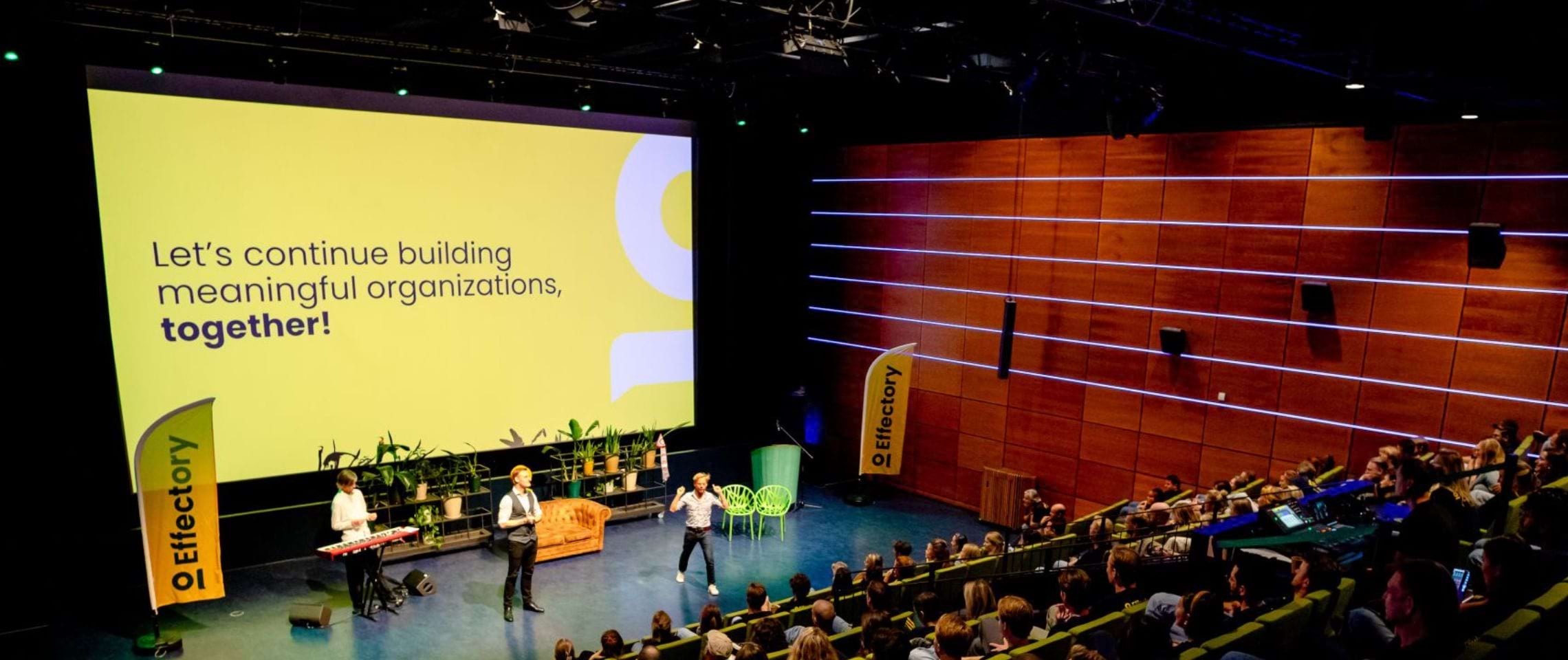
At Effectory, we haven’t just observed this 30-year evolution. We’ve helped shape it. From the earliest days of structured employee feedback to today’s AI-powered listening, we’ve worked alongside thousands of organizations to turn employee voices into meaningful action. That experience is built into everything we do: our scientifically validated surveys, our benchmarks drawn from millions of responses, and our platform that’s made to help you move from insight to real impact.
Book a free demo. See our solutions in action.
Effectory is Europe's Leading provider of Employee Listening Solutions. Schedule a product demo and discover how to enhance your employees' engagement.
Demo request