Organizations face the challenge of achieving their strategic goals while the world around them keeps changing. Digitalization, AI, new ways of working: the changes keep coming. Yet when it’s time to plan the year ahead, many organizations fall back on what they already know. They copy initiatives from the past and hope these will bring success once again.
Employee strategy stuck on the HR island? Why it belongs at the center—and how to get it there

The question is: does that still work? The past offers no guarantee for the future. Whether you’re a CEO, a CHRO, or a team lead, you need to keep experimenting and be willing to change. A crucial factor in that success? Your people. But how often is the employee strategy truly integrated into the organizational strategy?
Why your employee strategy shouldn’t stand alone
In many organizations, leadership teams treat their employee strategy as a vertical pillar alongside other strategic goals. Digitalization in one corner, international expansion in another, and “the employee” as a separate component.
It’s time to flip that pillar and recognize that your people don’t stand beside your strategy. They run straight through it.
Think about your annual plan. You probably have several major change initiatives on the agenda. Whether it’s digitalization, cultural/organizational transformation, or expansion into new markets, those initiatives will succeed or fail because of your people. Not because of the plan itself, but because of the employees who need to execute it daily.
What makes a strong employee strategy?
An employee strategy can’t exist without a clear organizational strategy. You first need to know where you’re headed as an organization before you can determine what role people play in getting there.
The question isn’t just “What do we want to achieve?” but “What movements do we need to make, and what role do our people play in that?”
A strong employee strategy rests on four building blocks:
- Data and insights: You need to know where you stand before you can determine where to go. Data gives you the ability to set a clear direction and make the case for why certain choices are important.
- Leadership: This is the layer that translates direction into action. At every level, leaders need to be able and willing to make strategy tangible for their teams. If that translation breaks down, execution breaks down with it.
- Performance environment: Are you enabling people to deliver and improve over time? Clear goals, continuous feedback, and development opportunities ensure that people don’t just do their work but get better, faster, and more aligned with what the organization needs.
- Engagement: Data, leadership, and the performance environment set the direction and create the conditions. But engagement determines whether (and how fast) people get there. Do they want to contribute to the organization’s goals?
Beyond the wave: From reactive to preventive
This is where things often go wrong. Organizations manage based on absenteeism and retention, but these are lagging indicators. By the time they show up, it’s already too late. It’s like navigating at sea by staring at the wake behind you instead of the horizon ahead.
Absenteeism and turnover are the endpoint of a long chain of signals. It’s much more effective to measure at the front end: How engaged are people? Can they do their work well? Do they have the right resources? If you map that out, you can course-correct before problems turn into high absenteeism numbers or resignations.
An example from practice: A construction organization noticed in their feedback data that IT was a major blocker. Employees on-site had to submit more and more digital information, but didn’t have the right tools for it. Laptops didn’t work on construction sites. By listening to these signals and providing handheld devices, they solved a practical problem and showed their people that they were heard, which increased satisfaction and engagement.
The power of a common language
Organizations optimize their financial processes continuously. Every month, every quarter, the numbers are analyzed. Product feedback gets collected and reviewed just as regularly. But when it comes to people? It often remains at an annual measurement – and even that isn’t always used properly.
Yet your employees are closest to the work. They see daily where things run smoothly, where things get stuck, and where the strategy does or doesn’t land. By listening regularly, you create a rhythm where the entire organization talks about progress – not just once a year, but consistently.
Think about it like this: if you asked people throughout your organization to name the top strategic goals, could they? And could they tell you how their work contributes to those goals? At many organizations, the strategy is crystal clear at the executive level, but by level three or four, the story has gotten lost.
From wellbeing to organizational effectiveness
Wellbeing is important. People need to be able to work in a healthy and safe environment and sustain their performance over time. But wellbeing alone isn’t enough to get a seat at the table as a HR leader. The real power lies in connecting wellbeing with organizational effectiveness.
It’s not just about whether people feel good (although that’s important), but whether they can effectively contribute to strategic goals. Can they do what’s needed? Do they have the right environment for that? Do they understand why certain changes are happening?
When you make organizational effectiveness measurable, you change the conversation. You no longer come to the board from an HR perspective asking to invest in “soft” matters. You bring business-relevant data that shows where organizational effectiveness is potentially leaking. You can pinpoint with accuracy that a certain team is struggling with a change initiative, not because they don’t want to make it work, but because something is getting in their way.
AI is changing work – are you talking about it?
Many organizations have AI high on the agenda. And rightly so, because the impact is significant. But the question often is: “what exactly are we going to use it for?” Implementing a system isn’t a solution on its own. You need to know what problem you’re solving.
Even more important is the impact on employees. Tasks change, some disappear, new ones emerge. This requires a different skillset. Consultants who currently analyze results and give advice can already see that AI tools will soon make suggestions based on data. That doesn’t mean their job disappears, but it does mean they need to evolve. What’s their added value when the platform handles certain analyses automatically?
These questions are on the minds of many employees. And they’re not new. Every major transformation brings the same uncertainty. The answer lies in dialogue. Explain why certain changes are necessary for the organization’s future. Talk about what skills will be needed. And more importantly, check in regularly to see if people understand the story and direction and what obstacles they’re facing.
Three questions to ask yourself today
Strengthening your employee strategy starts with three questions:
First question: Does my employee strategy align with the organizational strategy? Are the components in my employee strategy directly connected to what we want to achieve as an organization? If not, then that’s your starting point.
Second question: How much do I actually know about how we’re doing on those strategy components? Do I have enough information to know if we’re on track? Or am I relying on gut feeling and backward-looking numbers?
Third question: When do I check if we’re making progress? Once a year? Or do we have a rhythm of regular check-ins? Continuous, targeted adjustment beats a major annual feedback moment.
Focus where it matters most
No organization performs at 100% on all fronts, all the time. That’s not the point either. The point is that you can realistically look at where things are going well and where adjustment is needed. Often, you’ll find that some parts of the organization are thriving while others are struggling.
That specificity is powerful:
- As a CEO, you can see where in the organization your strategy isn’t landing and whether leadership is the blocker.
- As a CHRO, you can prove which parts of your people strategy are delivering results and which need adjustment.
- As an HR Business Partner, you can walk into a conversation with a manager armed with team-level data instead of assumptions.
- And as a manager, you get clarity on what your team actually needs, so you can prioritize instead of being pulled in every direction.
Say you find three of five regions understand the new strategy and know what’s expected of them. Two regions don’t. Now you know where to focus. Not with an HR story about engagement, but with a business story about how to help those regions also contribute to the goals.
From annual surveys to continuous insights
Listening to your employees isn’t an annual ritual. It’s a continuous process that needs to be integrated into the culture. Of course you can’t send out a lengthy questionnaire every week. But you can run regular short check-ins on the themes that matter most.
Treat employee feedback the way you treat financial data: with structure, a fixed rhythm, and with the intention to adjust where and when needed. That way, listening becomes a navigation system that helps you stay on course, even when the wind changes direction.
Leaders at every level can then ask their teams: “Where do we stand on our most important goals? What’s helping us? What’s in the way?” Those conversations keep the entire organization focused on where you’re headed. They keep the strategy alive rather than letting it gather dust in a drawer.
Take your people strategy off the HR island
The challenge is clear: take your employee strategy off the HR island and make it an integral part of your organizational strategy. Create a common language about organizational effectiveness and what it means for you. Measure what matters, not just what’s easy to measure.
Every organization wants to impact business results. But not every organization makes that connection explicit between how people feel, what they can do, and the results they deliver. That connection is where the real value lies. Not just for HR, but for the entire organization.
Employees aren’t a pillar beside your strategy. They’re the engine that brings it to life. Treat them that way.
This is exactly where Effectory comes in. We help you connect ongoing employee feedback to leadership decisions and business strategy. Our AI-powered platform gives you the insights to see where your strategy is landing, where it’s getting stuck, and where you need to act. Combined with benchmarks from over 1,200 organizations and 30 years of feedback expertise, we help you turn listening into a strategic advantage.
Ready to move your people strategy from the HR island to the boardroom?
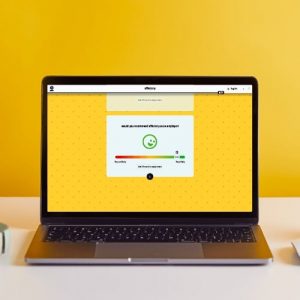
Book a free demo. See our solutions in action.
Effectory is Europe's Leading provider of Employee Listening Solutions. Schedule a product demo and discover how to enhance your employees' engagement.
Demo request