Look at the minus sign: What’s really getting in the way of performance?

Performance = Potential – Interference
I recently came across The Inner Game of Tennis by Timothy Gallwey and, despite the title, it’s not really a book about tennis. Or at least, that’s not what I took from it.
One of the central ideas is that whenever you play tennis, you’re actually playing two games at the same time. There’s the obvious one on the outside, with an opponent, a score and ultimately a winner and a loser, but there’s also the game inside your head. The one where you start overthinking, worry about making mistakes or become so focused on the outcome that you actually get in your own way.
Gallwey captures this in a very simple formula: Performance = Potential – Interference.
And that one stuck with me, because at work we tend to focus almost entirely on the first part of that equation.
When performance isn’t where we want it to be, our instinct is usually to add something. More training, better processes, new technology, another dashboard or, increasingly, AI.
But what if the bigger opportunity is sometimes not adding more potential, but understanding what’s getting in the way of the potential that is already there?
Finding the interference
Organizations have plenty of interference too, although we probably don’t call it that.
It can be unclear priorities, too many approvals, a lack of trust, poor collaboration, workload, managers who struggle to create direction or people simply waiting for permission instead of taking initiative.
None of those things necessarily mean you have bad or unmotivated people. In many cases, the capability and willingness are already there, but something in the environment around them is making it harder to perform.
And when you treat a performance blocker as a capability problem, you end up solving the wrong problem.
Training won’t fix unclear priorities. A new tool won’t fix a lack of trust. And telling people to take more ownership won’t help much if they don’t actually have the autonomy to make decisions.
Feedback can help us see what is getting in the way
This is where employee feedback becomes much more interesting to me than simply measuring engagement.
Business results tell us what is happening, but they don’t always tell us why.
Feedback can.
Do people understand what is expected of them? Can they make decisions quickly enough? Does their manager help them move forward? Is workload manageable? Do teams collaborate effectively? Do people feel comfortable challenging decisions? And when they raise something, do they believe anything will actually happen?
Those aren’t just engagement questions. They tell us something about how well the organization enables people to perform.
And that changes the conversation.
Instead of saying: “This team is underperforming,” we can ask: “What is preventing this team from performing at its best?”
The first is a judgement. The second creates curiosity. That’s what good employee feedback should do. Not create lists of good and bad teams or managers, but help us understand where people get stuck, what high-performing teams might be doing differently and, ultimately, what we can change.
Look at the minus sign
Which brings me back to Gallwey’s formula: Performance = Potential – Interference.
Organizations invest enormous amounts of time and money in increasing potential. We hire better people, develop new skills, implement better technology and give people increasingly powerful AI tools. And we should.
But perhaps we should spend just as much time looking at the minus sign.
What’s getting in the way?
That’s where employee feedback can play a much bigger role. Not listening because it’s time for another survey, but listening to understand what helps people perform, where they get stuck and what we can change about the environment around them.
Because sometimes the potential is already there. We just need to get better at seeing, and removing, what is getting in the way.
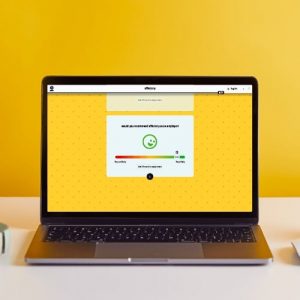
Book a free demo. See our solutions in action.
Effectory is Europe's Leading provider of Employee Listening Solutions. Schedule a product demo and discover how to enhance your employees' engagement.
Demo request